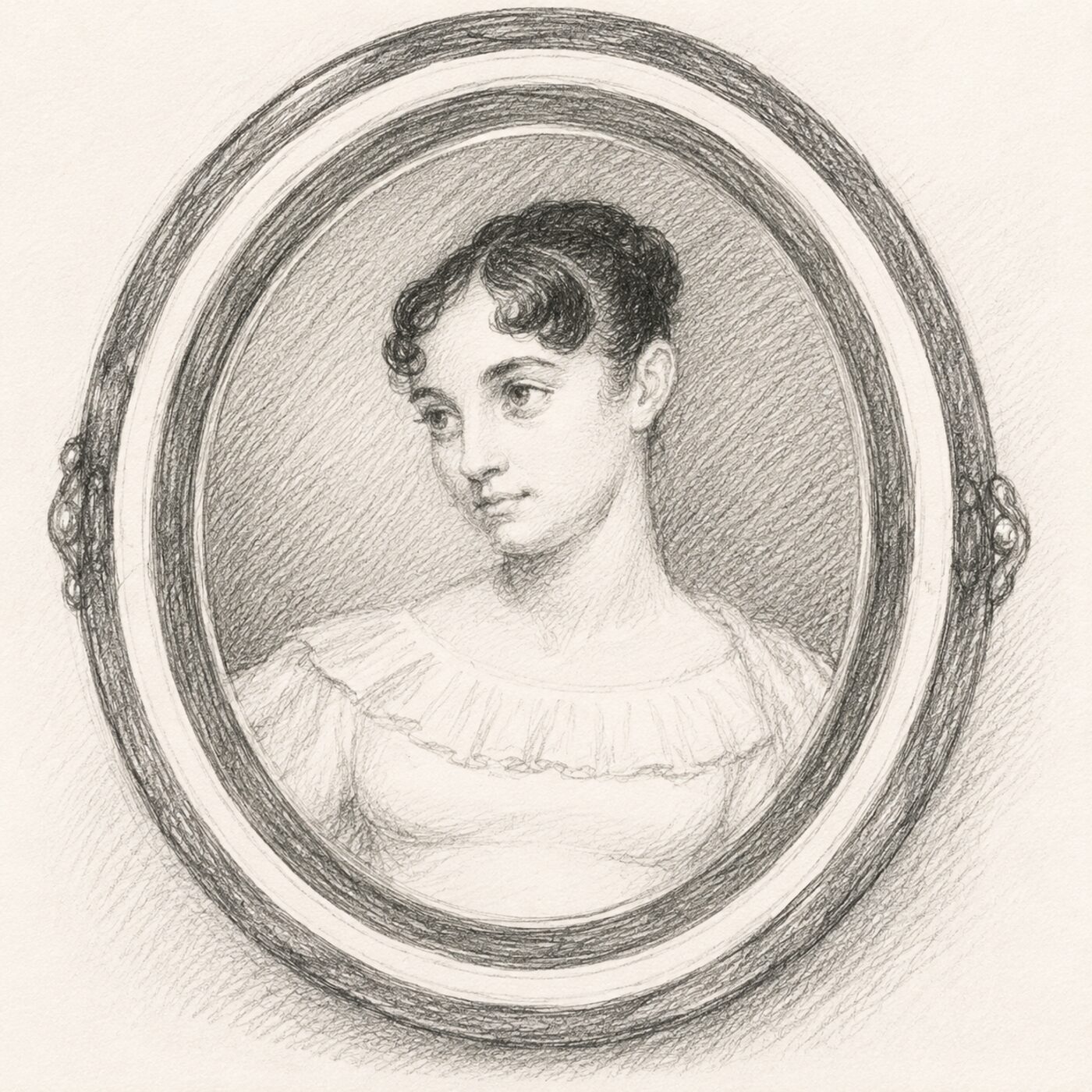
Theodosia Burr Alston was the most accomplished woman of her generation, tutored in Latin, Greek, and mathematics by her father, Vice President Aaron Burr, hostess of his household at fourteen, wife of a South Carolina governor at eighteen. She was also, by the winter of 1812, a woman drowning in grief. Her father had killed Alexander Hamilton, stood trial for treason, and fled to Europe. Her ten-year-old son had just died of malarial fever.
When Burr finally returned to New York in 1812, Theodosia resolved to go to him. Her husband, newly sworn in as governor and commanding the state militia in a country at war, could not leave South Carolina. So on December 31, 1812, she boarded the schooner Patriot at Georgetown, a fast former privateer, her guns hidden below decks, her name painted over, and sailed north into the open sea.
The Patriot and everyone aboard were never heard from again.
Wreckers, Pirates, and a Lantern on a Donkey's Neck
The disappearance became one of early America's great mysteries. A British fleet logbook records a ferocious storm off Cape Hatteras on January 2–3, 1813. But the sea gave up no wreckage, and darker stories took root. Deathbed confessions of pirates surfaced for decades, several claiming the Patriot was taken and everyone aboard forced overboard. And along these banks, people whispered of the wreckers, land pirates who worked the shoals on stormy nights.
Their method was simple and monstrous. They would hang a lantern from a donkey's neck and walk it slowly along the beach. To a storm-blind ship offshore, the bobbing light looked like a vessel riding safely at anchor. Ships steered for the false harbor, struck the shoals, and were swarmed, robbed, with no survivors left to testify. The legend here holds that the Patriot ran aground off Smith Island (today's Bald Head Island), that the wreckers murdered all aboard, and that among the plunder carried ashore was a portrait of a dark-eyed young woman, a gift Theodosia was bringing north for her father.
Decades later, in 1869, a physician treating an elderly woman at Nag's Head noticed an unusually fine oil portrait on her cottage wall. Her first husband, she said, had taken it from a wrecked ship during the War of 1812. That painting, the famous "Nag's Head Portrait," which Burr family members later swore bore Theodosia's face, hangs today at Yale University's Lewis Walpole Library.
The Confessions
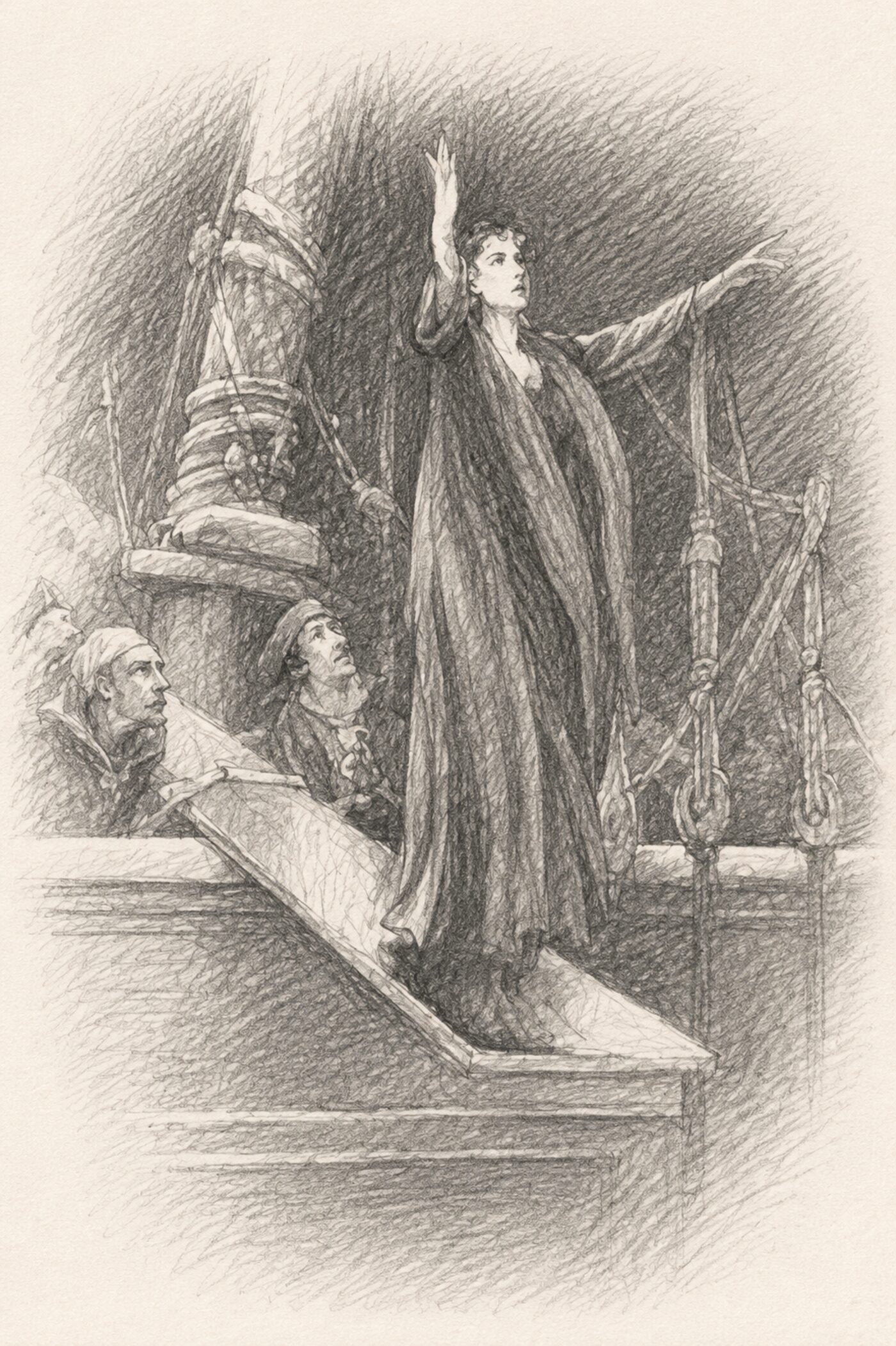
For forty years after the Patriot vanished, the mystery refused to close. Beginning around 1850, a procession of dying sailors and condemned criminals began confessing. One account, published by Charles Gayarré in 1872, put the confession in the mouth of the pirate Dominique Youx: his men had found the Patriot dismasted off Hatteras, murdered the crew, and forced the lady aboard to walk the plank. In that telling she stepped onto the board with unearthly calm, "descended into the sea with graceful composure," waved once, and was gone. Another confession, attributed to a pirate named Frank Burdick in 1848, added a detail that made the story impossible to forget: the pirates left her clothing untouched, and with it a fine portrait, which wreckers later carried ashore from the deserted ship.
Stranger stories still drifted back from farther shores. Early settlers on the Texas Gulf Coast told of a Karankawa chief who wore a gold locket engraved with the name Theodosia. He said he had pulled a young white woman, chained by the ankle, from a wreck at the mouth of the San Bernard River; before she died in his arms she told him she was the daughter of a great chief of the white men, misunderstood by his people. And in Alexandria, Virginia, some still point to the 1816 grave of the nameless "Female Stranger" and wonder aloud who really lies beneath it. In 1913, an elderly Norfolk man recalled that early in 1813 the body of a young woman "with every indication of refinement" had washed ashore at Cape Charles and been buried quietly on a nearby farm.
She is everywhere and nowhere, which is precisely how a ghost story begins.
The Woman on the Beach
Which brings us to what residents and visitors have reported on Bald Head Island for two centuries. You are walking the beach at night, the moon on the waves. In the distance, a young woman comes toward you in a long dress of another era, finely dressed for a midnight stroll, you think. Then you notice she is transparent. That she gives off a pale glow. That she leaves no footprints in the sand.
Some see her walking slowly, scanning the tideline, searching, the story goes, for the lost portrait that never reached her father. Others see her running, pursued by three other specters: the men who killed her, reliving the chase down the strand. She has never spoken. Perhaps she is still in 1813, and somewhere beyond the dark horizon her father is still waiting for her in New York.
"If you want to see a specter you may find yourself walking the shores in the hope of seeing this lonely and lost woman." Kevin Ward, Cape Fear Living
Theodosia remains Bald Head Island's most famous ghost, a fixture of the island's evening ghost walks beneath Old Baldy, the 1817 lighthouse that rose four years too late to bring the Patriot home.